Thứ Sáu, 22 tháng 5, 2020

BurpSuite Introduction & Installation


What is BurpSuite?
Burp Suite is a Java based Web Penetration Testing framework. It has become an industry standard suite of tools used by information security professionals. Burp Suite helps you identify vulnerabilities and verify attack vectors that are affecting web applications. Because of its popularity and breadth as well as depth of features, we have created this useful page as a collection of Burp Suite knowledge and information.

In its simplest form, Burp Suite can be classified as an Interception Proxy. While browsing their target application, a penetration tester can configure their internet browser to route traffic through the Burp Suite proxy server. Burp Suite then acts as a (sort of) Man In The Middle by capturing and analyzing each request to and from the target web application so that they can be analyzed.


Everyone has their favorite security tools, but when it comes to mobile and web applications I've always found myself looking BurpSuite . It always seems to have everything I need and for folks just getting started with web application testing it can be a challenge putting all of the pieces together. I'm just going to go through the installation to paint a good picture of how to get it up quickly.

BurpSuite is freely available with everything you need to get started and when you're ready to cut the leash, the professional version has some handy tools that can make the whole process a little bit easier. I'll also go through how to install FoxyProxy which makes it much easier to change your proxy setup, but we'll get into that a little later.

Requirements and assumptions:

Mozilla Firefox 3.1 or Later Knowledge of Firefox Add-ons and installation The Java Runtime Environment installed

Download BurpSuite from http://portswigger.net/burp/download.htmland make a note of where you save it.

on for Firefox from   https://addons.mozilla.org/en-US/firefox/addon/foxyproxy-standard/


If this is your first time running the JAR file, it may take a minute or two to load, so be patient and wait.


Video for setup and installation.


You need to install compatible version of java , So that you can run BurpSuite.
More info

Thứ Năm, 21 tháng 5, 2020

Hacking All The Cars - Part 2


Connecting Hardware to Your Real Car: 

 I realized the other day I posted Part 2 of this series to my youtube awhile ago but not blogger so this one will be quick and mostly via video walkthrough. I often post random followup videos which may never arrive on this blog. So if you're waiting on something specific I mentioned or the next part to a series its always a good idea to subscribe to the YouTube. This is almost always true if there is video associated with the post.  

In the last blog we went over using virtual CAN devices to interact with a virtual car simulators of a CAN network This was awesome because it allowed us to learn how to interact with he underlying CAN network without fear of hacking around on an expensive automobile. But now it's time to put on your big boy pants and create a real CAN interface with hardware and plug your hardware device into your ODB2 port. 

The video I created below will show you where to plug your device in, how to configure it and how to take the information you learned while hacking around on the virtual car from part1 and apply it directly to a real car.   

Video Walk Through Using Hardware on a Real Car


As a reference here are the two device options I used in the video and the needed cable: 

Hardware Used: 

Get OBD2 Cable:
https://amzn.to/2QSmtyL

Get CANtact:
https://amzn.to/2xCqhMt

Get USB2CAN:
https://shop.8devices.com/usb2can


Creating Network Interfaces: 

As a reference here are the commands from the video for creating a CAN network interface: 

USB2Can Setup: 
The following command will bring up your can interface and you should see the device light color change: 
sudo ip link set can0 up type can bitrate 125000

Contact Setup: 
Set your jumpers on 3,5 and 7 as seen in the picture in the video
Sudo slcand -o -s6 /dev/ttyACM can0 <— whatever device you see in your DMESG output
Ifconfig can0 up

Summary: 

That should get you started connecting to physical cars and hacking around. I was also doing a bit of python coding over these interfaces to perform actions and sniff traffic. I might post that if anyone is interested. Mostly I have been hacking around on blockchain stuff and creating full course content recently so keep a look out for that in the future. 

More information


  1. Penetration Testing A Hands-On Introduction To Hacking
  2. Ethical Hacking Course
  3. Tools Hacking
  4. Hacking Etico Pdf
  5. Hacking The System
  6. Hacking Etico Pdf
  7. Android Hacking
  8. Hacking Etico Pdf
  9. Quiero Ser Hacker
  10. Hacking With Swift
  11. Password Hacking
  12. Hacking 101
  13. Curso Completo De Hacking Ético
  14. Hacking Articles

How To Recover Files That Are Deleted From Recycle Bin

How To Recover Files That Are Deleted From Recycle Bin

How To Recover Files That Are Deleted From Recycle Bin

How To Recover Files That Are Deleted From Recycle Bin

Well, Windows users have a bad habit of removing files from recycle bin. Deleting useless files from Recycle Bin helps a user to save some storage space which can improve the speed of a computer. However, Windows users do that more frequently and later regret. Actually, Recycle Bin is a place from where we can get back our deleted files and folders.
Sometimes, we accidentally delete our important files and folders and due to some reason we lose them from Recycle bin too! At that time, we search for recovery methods. Well, there are many methods available over the web which can help you to recover deleted files from computer, but, when it comes to reliability, nothing can beat EaseUS.

What Is EaseUS Data Recovery Wizard?

EaseUS is one of the leading software providers which is known for its data recovery programme. EaseUS offers some free data recovery software that can help you to recover deleted, formatted or lost data from PC, laptop or removable device easily and quickly.
One of the best thing about EaseUS is that it provides tools for recycle bin recovery which can help you to get back files that you have deleted from the Recycle bin itself. EaseUS Data Recovery Wizard free can easily recover lost files, pictures, documents, videos and more from deleting, formatting, partition loss, OS crash, virus attack and other data loss cases.

How To Recover Deleted Files?

If you are struggling to get back your lost data files, then here is an easy data recovery method which will help you to get back deleted files on your computer. Below, we are going to share a mini guide on how to use EaseUS Recycle Bin Recovery to get back your deleted data.
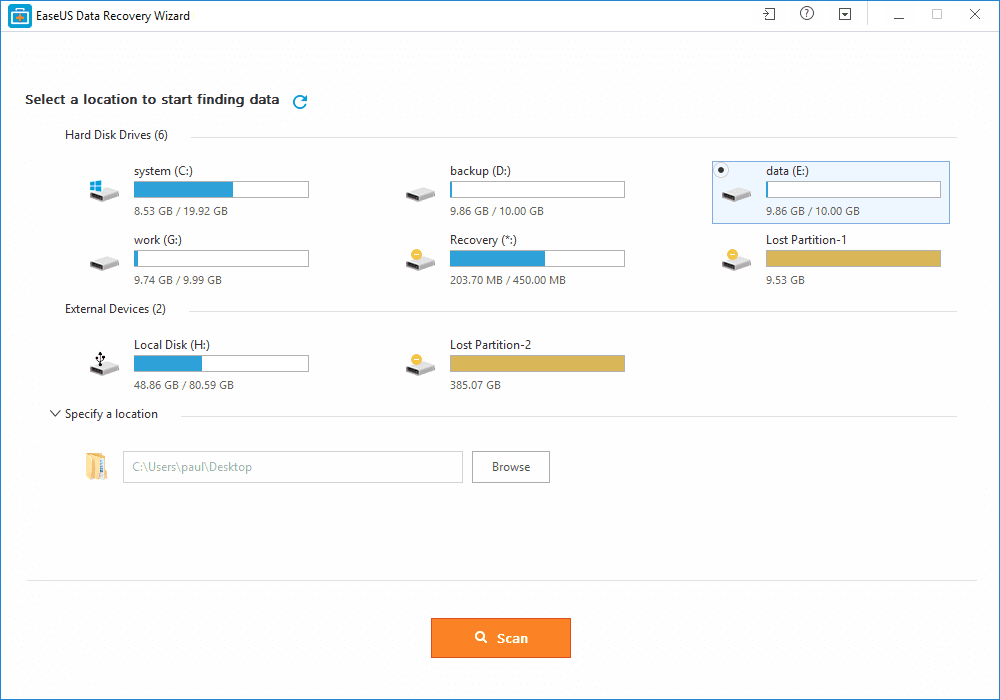
Step 1. First of all, you need to download and install EaseUS Data Recovery Wizard on your Windows computer and then launch it normally. You need to select the location where you want to scan and then click on 'Scan'
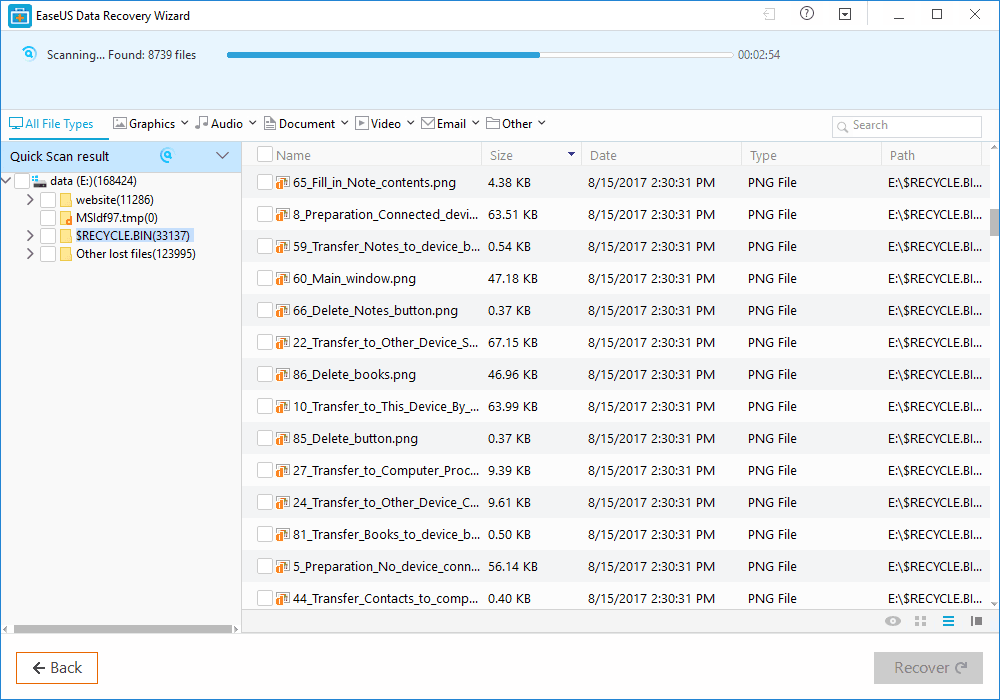
Step 2. Now, wait for few minutes until the tool finishes scanning your drive. The tool search for files that got deleted or cleaned from the Recycle Bin.
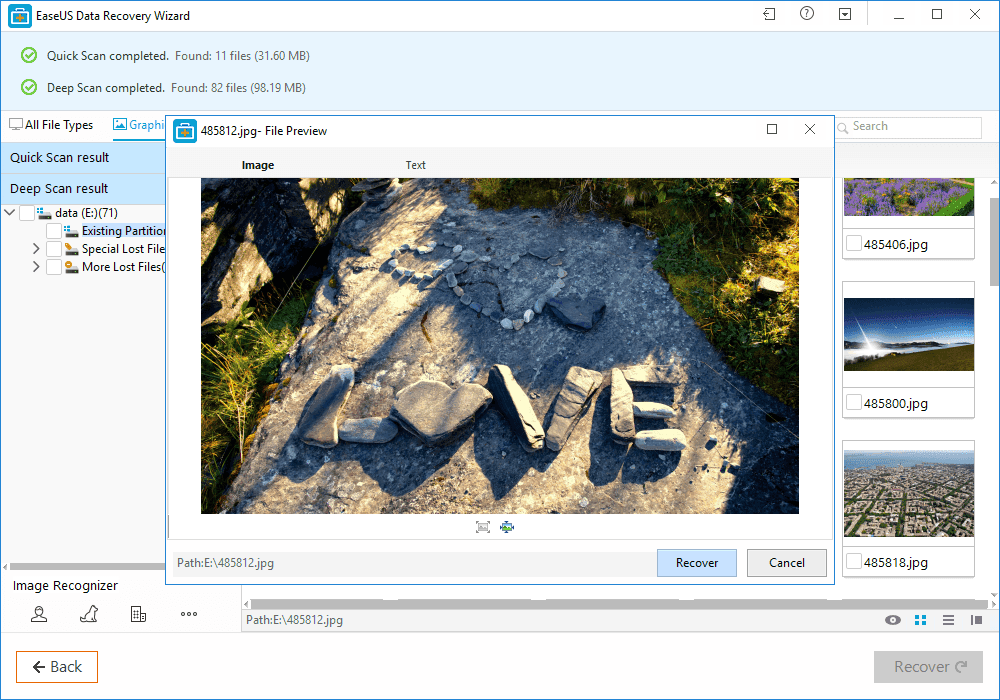
Step 3. Now it will show you files that you can recover. Here you need to click on the file which you want to recover and click on 'Recover'
That's it, you are done! This is how you can use EaseUS data recovery to get back your deleted files on your computer.

Benefits of EaseUS Data Recovery

Well, the data recovery tool provided by EaseUS comes with many benefits. It can not only recover accidentally deleted files, but it can also recover data in case of Virus Attacks, Hard Disk Damage, OS Crash etc.
You can also use this awesome data recovery wizard to recover deleted files from External Disk, USB Drive, Camcorder, Mobile Devices, Zip Drive, iPod, Music Player and more.
Overall, this is one of the best data recovery tools you can have on your Windows computer. EaseUS Data Recovery also has a free version with restricted features. Overall, this is a stress-free solution to get back your deleted files
More articles
  1. Hacking Growth Pdf
  2. Curso Hacking Etico
  3. Hacking Growth Pdf
  4. Cómo Se Escribe Hacker
  5. Chema Alonso Wikipedia
  6. Hacking Games Online
  7. Como Empezar A Hackear
  8. Kali Hacking
  9. Cracker Informatico

TLS-Attacker V2.2 And The ROBOT Attack

We found out that many TLS implementations are still vulnerable to different variations of a 19-year old Bleichenbacher's attack. Since Hanno argued to have an attack name, we called it ROBOT: https://robotattack.org

Given the new attack variants, we released a new version of TLS-Attacker 2.2, which covers our vulnerabilities.

Bleichenbacher's attack from 1998

In 1998, Daniel Bleichenbacher discovered that the error messages given by SSL servers for errors in the PKCS #1 1.5 padding allow an adversary to execute an adaptive-chosen ciphertext attack. This attack also belongs to the category of padding oracle attacks. By performing the attack, the adversary exploits different responses returned by the server that decrypts the requests and validates the PKCS#1 1.5 padding. Given such a server, the attacker can use it as an oracle and decrypt ciphertexts.
We refer to one of our previous blog posts for more details.

OK, so what is new in our research?

In our research we performed scans of several well-known hosts and found out many of them are vulnerable to different forms of the attack. In the original paper, an oracle was constructed from a server that responded with different TLS alert messages. In 2014, further side-channels like timings were exploited. However, all the previous studies have considered mostly open source implementations. Only a few vulnerabilities have been found.

In our scans we could identify more than seven vulnerable products and open source software implementations, including F5, Radware, Cisco, Erlang, Bouncy Castle, or WolfSSL. We identified new side-channels triggered by incomplete protocol flows or TCP socket states.

For example, some F5 products would respond to a malformed ciphertext located in the ClientKeyExchange message with a TLS alert 40 (handshake failure) but allow connections to timeout if the decryption was successful. We could observe this behaviour only when sending incomplete TLS handshakes missing ChangeCipherSpec and Finished messages.
See our paper for more interesting results.

Release of TLS-Attacker 2.2

These new findings motivated us to implement the complete detection of Bleichenbacher attacks in our TLS-Attacker. Before our research, TLS-Attacker had implemented a basic Bleichenbacher attack evaluation with full TLS protocol flows. We extended this evaluation with shortened protocol flows with missing ChangeCipherSpec and Finished messages, and implemented an oracle detection based on TCP timeouts and duplicated TLS alerts. In addition, Robert (@ic0ns) added many fixes and merged features like replay attacks on 0-RTT in TLS 1.3.
You can find the newest version release here: https://github.com/RUB-NDS/TLS-Attacker/releases/tag/v2.2

TLS-Attacker allows you to automatically send differently formatted PKCS#1 encrypted messages and observe the server behavior:
$ java -jar Attacks.jar bleichenbacher -connect [host]:[port]
In case the server responds with different error messages, it is most likely vulnerable. The following example provides an example of a vulnerable server detection output:
14:12:42 [main] CONSOLE attacks.impl.Attacker - A server is considered vulnerable to this attack if it responds differently to the test vectors.
14:12:42 [main] CONSOLE attacks.impl.Attacker - A server is considered secure if it always responds the same way.
14:12:49 [main] CONSOLE attacks.impl.Attacker - Found a difference in responses in the Complete TLS protocol flow with CCS and Finished messages.
14:12:49 [main] CONSOLE attacks.impl.Attacker - The server seems to respond with different record contents.
14:12:49 [main] INFO attacks.Main - Vulnerable:true
In this case TLS-Attacker identified that sending different PKCS#1 messages results in different server responses (the record contents are different).
Related posts

  1. Growth Hacking Courses
  2. Curso De Hacking Etico
  3. Hacking Growth Sean Ellis
  4. Live Hacking
  5. Hacking Y Seguridad
  6. Hacking Software
  7. Hacking Day

$$$ Bug Bounty $$$

What is Bug Bounty ?


A bug bounty program, also called a vulnerability rewards program (VRP), is a crowdsourcing initiative that rewards individuals for discovering and reporting software bugs. Bug bounty programs are often initiated to supplement internal code audits and penetration tests as part of an organization's vulnerability management strategy.


Many software vendors and websites run bug bounty programs, paying out cash rewards to software security researchers and white hat hackers who report software vulnerabilities that have the potential to be exploited. Bug reports must document enough information for for the organization offering the bounty to be able to reproduce the vulnerability. Typically, payment amounts are commensurate with the size of the organization, the difficulty in hacking the system and how much impact on users a bug might have.


Mozilla paid out a $3,000 flat rate bounty for bugs that fit its criteria, while Facebook has given out as much as $20,000 for a single bug report. Google paid Chrome operating system bug reporters a combined $700,000 in 2012 and Microsoft paid UK researcher James Forshaw $100,000 for an attack vulnerability in Windows 8.1.  In 2016, Apple announced rewards that max out at $200,000 for a flaw in the iOS secure boot firmware components and up to $50,000 for execution of arbitrary code with kernel privileges or unauthorized iCloud access.


While the use of ethical hackers to find bugs can be very effective, such programs can also be controversial. To limit potential risk, some organizations are offering closed bug bounty programs that require an invitation. Apple, for example, has limited bug bounty participation to few dozen researchers.

Related links


Thứ Tư, 20 tháng 5, 2020

Remot3d - An Easy Way To Exploiting

Related word


Reversing Rust String And Str Datatypes

Lets build an app that uses several data-types in order to see how is stored from a low level perspective.

Rust string data-types

The two first main objects are "str" and String, lets check also the constructors.


Imports and functions

Even such a basic program links several libraries and occupy 2,568Kb,  it's really not using the imports and expots the runtime functions even the main. 


Even a simple string operation needs 544 functions on rust:


Main function

If you expected see a clear main function I regret to say that rust doesn't seem a real low-level language In spite of having a full control of the memory.


Ghidra turns crazy when tries to do the recursive parsing of the rust code, and finally we have the libc _start function, the endless loop after main is the way Ghidra decompiles the HLT instruction.


If we jump to main, we see a function call, the first parameter is rust_main as I named it below:


If we search "hello world" on the Defined Strings sections, matches at the end of a large string


After doing "clear code bytes" we can see the string and the reference:


We can see that the literal is stored in an non null terminated string, or most likely an array of bytes. we have a bunch of byte arrays and pointed from the code to the beginning.
Let's follow the ref.  [ctrl]+[shift]+[f] and we got the references that points to the rust main function.


After several naming thanks to the Ghidra comments that identify the rust runtime functions, the rust main looks more understandable.
See below the ref to "hello world" that is passed to the string allocated hard-coding the size, because is non-null terminated string and there is no way to size this, this also helps to the rust performance, and avoid the c/c++ problems when you forgot the write the null byte for example miscalculating the size on a memcpy.


Regarding the string object, the allocator internals will reveal the structure in static.
alloc_string function call a function that calls a function that calls a function and so on, so this is the stack (also on static using the Ghidra code comments)

1. _$LT$alloc..string..String$u20$as$u20$core..convert..From$LT$$RF$str$GT$$GT$::from::h752d6ce1f15e4125
2. alloc::str::_$LT$impl$u20$alloc..borrow..ToOwned$u20$for$u20$str$GT$::to_owned::h649c495e0f441934
3. alloc::slice::_$LT$impl$u20$alloc..borrow..ToOwned$u20$for$u20$$u5b$T$u5d$$GT$::to_owned::h1eac45d28
4. alloc::slice::_$LT$impl$u20$$u5b$T$u5d$$GT$::to_vec::h25257986b8057640
5. alloc::slice::hack::to_vec::h37a40daa915357ad
6. core::slice::_$LT$impl$u20$$u5b$T$u5d$$GT$::len::h2af5e6c76291f524
7. alloc::vec::Vec$LT$T$GT$::extend_from_slice::h190290413e8e57a2
8. _$LT$alloc..vec..Vec$LT$T$GT$$u20$as$u20$alloc..vec..SpecExtend$LT$$RF$T$C$core..slice..Iter$LT$T$GT$$GT$$GT$::spec_extend::h451c2f92a49f9caa
...


Well I'm not gonna talk about the performance impact on stack but really to program well reusing code grants the maintainability and its good, and I'm sure that the rust developed had measured that and don't compensate to hardcode directly every constructor.

At this point we have two options, check the rust source code, or try to figure out the string object in dynamic with gdb.

Source code

Let's explain this group of substructures having rust source code in the hand.
The string object is defined at string.rs and it's simply an u8 type vector.


And the definition of vector can be found at vec.rs  and is composed by a raw vector an the len which is the usize datatype.


The RawVector is a struct that helds the pointer to the null terminated string stored on an Unique object, and also contains the allocation pointer, here raw_vec.rs definition.


The cap field is the capacity of the allocation and a is the allocator:


Finally the Unique object structure contains a pointer to the null terminated string, and also a one byte marker core::marker::PhantomData


Dynamic analysis

The first parameter of the constructor is the interesting one, and in x64 arch is on RDI register, the extrange sequence RDI,RSI,RDX,RCX it sounds like ACDC with a bit of imagination (di-si-d-c)

So the RDI parámeter is the pointer to the string object:


So RDI contains the stack address pointer that points the the heap address 0x5578f030.
Remember to disable ASLR to correlate the addresses with Ghidra, there is also a plugin to do the synchronization.

Having symbols we can do:
p mystring

and we get the following structure:

String::String {
  vec: alloc::vec::Vec {
    buf: alloc::raw_vec::RawVec {
      ptr: core::ptr::unique::Unique {
        pointer: 0x555555790130 "hello world\000",
        _marker: core::marker::PhantomData
     },
     cap: 11,
     a: alloc::alloc::Global
   },
   len: 11
  }
}

If the binary was compiled with symbols we can walk the substructures in this way:

(gdb) p mystring.vec.buf.ptr
$6 = core::ptr::unique::Unique {pointer: 0x555555790130 "hello world\000", _marker: core::marker::PhantomData}

(gdb) p mystring.vec.len

$8 = 11

If we try to get the pointer of each substructure we would find out that the the pointer is the same:


If we look at this pointer, we have two dwords that are the pointer to the null terminated string, and also 0xb which is the size, this structure is a vector.


The pionter to the c string is 0x555555790130


This seems the c++ string but, let's look a bit deeper:

RawVector
  Vector:
  (gdb) x/wx 0x7fffffffdf50
  0x7fffffffdf50: 0x55790130  -> low dword c string pointer
  0x7fffffffdf54: 0x00005555  -> hight dword c string pointer
  0x7fffffffdf58: 0x0000000b  -> len

0x7fffffffdf5c: 0x00000000
0x7fffffffdf60: 0x0000000b  -> low cap (capacity)
0x7fffffffdf64: 0x00000000  -> hight cap
0x7fffffffdf68: 0xf722fe27  -> low a  (allocator)
0x7fffffffdf6c: 0x00007fff  -> hight a
0x7fffffffdf70: 0x00000005 

So in this case the whole object is in stack except the null-terminated string.


Related word


Top 5 Most Useful Linux Tools For Programmers

Top 5 most useful linux tools for Programmer

Linux is a free and open-source software operating systems built around the Linux kernel. It typically packaged in a form known as a Linux distribution for both desktop and server use. It is a great development environment for programmers and developers. However, without the development tools, that would be impossible. Fortunately, plenty of Linux tools are available. Here are the top 5 most useful Linux tools for programmers.

Also Read;-  How To Clone One Android To Another

5 Most Useful Linux tools for Programmers

1. VIM

vim editor-compressed
VIM is a free and open source software written by Bram Moolenaar in 1991. It is designed for use both from a command-line interface and as a standalone application in a graphical user interface. It comes standard with almost every Linux distribution and is also known as "the programmer's editor". VIM is great for coding and can also be used for editing things like configuration files and XML documents.
Vim has been developed to be a cross-platform that supports many other platforms. In 2006, it was voted as the most popular editor amongst Linux Journal readers. In 2015, Stack Overflow developer survey found it to be the third most popular text editor while in 2016, the Stack Overflow developer survey found it to be the fourth most popular development environment.
Read more;-  How To Use WhatsApp without Mobile No

2. Zsh

Zsh is written in C and initially released in 1990. It is a Unix shell that can be used as an interactive login shell and as a powerful command interpreter for shell scripting. Zsh is an extended version of Bourne shell (BASH) with a large number of improvements, including some features of Bash, ksh, and tcsh. Zsh gives a user-friendly experience on the command line. It also gives better auto-completion, Vim key bindings, and smart guesses when you write a command wrong.
Its features include (but not limited to):
  • Programmable command-line completion,
  • Sharing of command history among all running shells
  • Extended file globbing
  • Improved variable/array handling
  • Editing of multi-line commands in a single buffer
  • Spelling correction
  • Various compatibility modes,
  • Themeable prompts, and
  • Loadable modules.

3. Byobu

It was initially released in 2009 written in Sh and Python. Byobu can be used to provide on-screen notification or status and tabbed multi-window management. Thus, it is intended to improve terminal sessions when users connect to remote servers with an operating system Linux and Unix-like. It is is an enhancement for the GNU Screen terminal multiplexer or tmux used with the GNU/Linux computer operating system.

4. GIT

git commandsGit was initially released on April 7, 2005. It is a version control system to track changes in computer files and to coordinate work on those files among multiple people. It is primarily used for source code management in software development and can be used to keep track of changes in any set of files available in the English language. It is aimed at speed, data integrity, and support for distributed, non-linear workflows. It is free and open source software distributed under the terms of the GNU General Public License version 2.
Moreover, Linus Torvalds was the creator of GIT for the development of the Linux kernel. On the other hand, its current maintainer since then is Junio Hamano. Thus, every Git directory on every computer is a full-fledged repository with complete history and full version tracking abilities, independent of network access or a central server.

5. Docker

Written by Solomon Hykes in 2013, it is a computer program that performs operating-system-level virtualization, the containerization, which is developed by Docker, Inc. Primarily, Docker was developed for Linux to use as the resource isolation features of the Linux kernel. It is a tool that can package an application and its dependencies in a virtual container that can run on any Linux server. This helps enable the flexibility and portability on where the application can run, whether on premises, public cloud, private cloud, bare metal, etc.  Moreover, it accesses the Linux kernel's virtualization features either directly using the libcontainer library.

Related news


Thứ Ba, 19 tháng 5, 2020

An Overview Of Exploit Packs (Update 25) May 2015


Update May 12, 2015

Added CVE-2015-0359 and updates for CVE-2015-0336


Reference table : Exploit References 2014-2015


Update March 20, 2015

Added CVE-2015-0336

------------------------
Update February 19, 2015

Added Hanjuan Exploit kit and CVE-2015-3013 for Angler 

Update January 24, 2015 
http://www.kahusecurity.com

Added CVE-2015-3010, CVE-2015-3011 for Agler and a few reference articles. 
If you notice any errors, or some CVE that need to be removed (were retired by the pack authors), please let me know. Thank you very much!


Update December 12, 2014


Update Jan 8, 2014

 This is version 20 of the exploit pack table - see the added exploit packs and vulnerabilities listed below.

                                             Exploit Pack Table Update 20                                           
  Click to view or download from Google Apps

I want to give special thanks to Kafeine  L0NGC47,  Fibon and  Curt Shaffer for their help and update they made.  Note the new Yara rules sheet / tab for yara rules for exploit kit.
I also want to thank Kahu securityKafeineMalforsec and all security companies listed in References for their research.

If you wish to be a contributor (be able to update/change the exploits or add yara rules), please contact me :)
If you have additions or corrections, please email, leave post comments, or tweet (@snowfl0w) < thank you!

The Wild Wild West image was created by Kahu Security  - It shows current and retired (retiring) kits.

List of changed kits
Gong Da / GonDad Redkit 2.2 x2o (Redkit Light)Fiesta (=Neosploit)  Cool  Styxy DotkaChef
CVE-2011-3544CVE-2013-2551CVE-2013-2465CVE-2010-0188CVE-2010-0188CVE-2012-5692
CVE-2012-0507CVE-2013-2471CVE-2013-0074/3896CVE-2011-3402CVE-2013-1493
CVE-2012-1723CVE-2013-1493CVE-2013-0431
CVE-2013-0431
CVE-2013-2423
CVE-2012-1889CVE-2013-2460CVE-2013-0634 CVE-2013-1493
CVE-2012-4681CVE-2013-2551 CVE-2013-2423
CVE-2012-5076
CVE-2013-0422
CVE-2013-0634
CVE-2013-2465


Angler FlashPack = SafePack White Lotus Magnitude (Popads)Nuclear 3.x Sweet Orange 
CVE-2013-0074/3896CVE-2013-0074/3896CVE-2011-3544CVE-2011-3402CVE-2010-0188CVE-2013-2423
CVE-2013-0634CVE-2013-2551CVE-2013-2465CVE-2012-0507CVE-2012-1723CVE-2013-2471
CVE-2013-2551 CVE-2013-2551CVE-2013-0634CVE-2013-0422CVE-2013-2551
CVE-2013-5329CVE-2013-2460CVE-2013-2423
CVE-2013-2471 ??CVE-2013-2471CVE-2013-2460
CVE-2013-2551CVE-2013-2551

CK HiManNeutrino  Blackhole (last)Grandsoft  Private EK
CVE-2011-3544CVE-2010-0188CVE-2013-0431CVE-2013-0422CVE-2010-0188 CVE-2006-0003
CVE-2012-1889CVE-2011-3544CVE-2013-2460CVE-2013-2460CVE-2011-3544CVE-2010-0188
CVE-2012-4681CVE-2013-0634CVE-2013-2463*CVE-2013-2471CVE-2013-0422CVE-2011-3544
CVE-2012-4792*CVE-2013-2465CVE-2013-2465*and + all or someCVE-2013-2423CVE-2013-1347
CVE-2013-0422CVE-2013-2551CVE-2013-2551exploitsCVE-2013-2463CVE-2013-1493
CVE-2013-0634* switch 2463*<>2465*from the previousCVE-2013-2423
CVE-2013-3897Possibly + exploitsversionCVE-2013-2460
* removedfrom the previous
version

Sakura 1.x LightsOutGlazunov Rawin Flimkit  Cool EK (Kore-sh)Kore (formely Sibhost) 
cve-2013-2471CVE-2012-1723CVE-2013-2463CVE-2012-0507CVE-2012-1723CVE-2013-2460CVE-2013-2423
CVE-2013-2460CVE-2013-1347cve-2013-2471CVE-2013-1493CVE-2013-2423CVE-2013-2463CVE-2013-2460
and + all or someCVE-2013-1690CVE-2013-2423CVE-2013-2471CVE-2013-2463
exploitsCVE-2013-2465CVE-2013-2471
from the previous
version


Styx 4.0Cool Topic EK Nice EK
CVE-2010-0188CVE-2012-0755CVE-2013-2423CVE-2012-1723
CVE-2011-3402CVE-2012-1876
CVE-2012-1723CVE-2013-0634
CVE-2013-0422CVE-2013-2465
CVE-2013-1493cve-2013-2471
CVE-2013-2423and + all or some
CVE-2013-2460exploits
CVE-2013-2463from the previous
CVE-2013-2472version
CVE-2013-2551
Social Eng


=================================================================

The Explot Pack Table has been updated and you can view it here.

Exploit Pack Table Update 19.1  - View or Download from Google Apps

If you keep track of exploit packs and can/wish  to contribute and be able to make changes, please contact me (see email in my profile)
I want to thank L0NGC47, Fibon, and Kafeine,  Francois Paget, Eric Romang, and other researchers who sent information for their help.


Update April 28, 2013 - added CVE-2013-2423 (Released April 17, 2013) to several packs. 
Now the following packs serve the latest Java exploit (update your Java!)

  1. Styx
  2. Sweet Orange
  3. Neutrino
  4. Sakura
  5. Whitehole
  6. Cool
  7. Safe Pack
  8. Crime Boss
  9. CritX


Other changes
Updated:
  1. Whitehole
  2. Redkit
  3. Nuclear
  4. Sakura
  5. Cool Pack
  6. Blackhole
  7. Gong Da
Added:
  1. KaiXin
  2. Sibhost
  3. Popads 
  4. Alpha Pack
  5. Safe Pack
  6. Serenity
  7. SPL Pack

    There are 5 tabs in the bottom of the sheet
  1. 2011-2013
  2. References
  3. 2011 and older
  4. List of exploit kits
  5. V. 16 with older credits


March 2013
The Explot Pack Table, which has been just updated, has migrated to Google Apps - the link is below. The new format will allow easier viewing and access for those who volunteered their time to keep it up to date.

In particular, I want to thank
L0NGC47, Fibon, and Kafeine  for their help.

There are 5 tabs in the bottom of the sheet
  1. 2011-2013
  2. References
  3. 2011 and older
  4. List of exploit kits
  5. V. 16 with older credits
The updates include
  1. Neutrino  - new
  2. Cool Pack - update
  3. Sweet Orange - update
  4. SofosFO aka Stamp EK - new
  5. Styx 2.0 - new
  6. Impact - new
  7. CritXPack - new
  8. Gong Da  - update
  9. Redkit - update
  10. Whitehole - new
  11. Red Dot  - new


The long overdue Exploit pack table Update 17 is finally here. It got a colorful facelift and has newer packs (Dec. 2011-today) on a separate sheet for easier reading.
Updates / new entries for the following 13 packs have been added (see exploit listing below)


  1. Redkit 
  2. Neo Sploit
  3. Cool Pack
  4. Black hole 2.0
  5. Black hole 1.2.5
  6. Private no name
  7. Nuclear 2.2 (Update to 2.0 - actual v. # is unknown)
  8. Nuclear 2.1  (Update to 2.0 - actual v. # is unknown)
  9. CrimeBoss
  10. Grandsoft
  11. Sweet Orange 1.1 Update to 1.0 actual v. # is unknown)
  12. Sweet Orange 1.0
  13. Phoenix  3.1.15
  14. NucSoft
  15. Sakura 1.1 (Update to 1.0  actual v. # is unknown)
  16. AssocAID (unconfirmed)  


Exploit lists for the added/updated packs


AssocAID (unconfirmed)
09-'12
CVE-2011-3106
CVE-2012-1876
CVE-2012-1880
CVE-2012-3683
Unknown CVE
5


Redkit
08-'12
CVE-2010-0188
CVE-2012-0507
CVE-2012-4681
3

Neo Sploit
09-'12
CVE-2012-1723
CVE-2012-4681
2?

Cool
08-'12
CVE-2006-0003
CVE-2010-0188
CVE-2011-3402
CVE-2012-0507
CVE-2012-1723
CVE-2012-4681
5

Black hole 2.0
09-'12
CVE-2006-0003
CVE-2010-0188
CVE-2012-0507
CVE-2012-1723
CVE-2012-4681
CVE-2012-4969 promised
5

Black hole 1.2.5
08-'12
CVE-2006-0003
CVE-2007-5659 /2008-0655
CVE-2008-2992
CVE-2009-0927
CVE-2010-0188
CVE-2010-1885
CVE-2011-0559
CVE-2011-2110
CVE-2012-1723
CVE-2012-1889
CVE-2012-4681
11

Private no name
09-'12
CVE-2010-0188
CVE-2012-1723
CVE-2012-4681
3

Nuclear 2.2 (Update to 2.0 - actual v. # is unknown)
03-'12
CVE-2010-0188
CVE-2011-3544
CVE-2012-1723
CVE-2012-4681
4

Nuclear 2.1 (Update to 2.0 - actual v. # is unknown)
03-'12
CVE-2010-0188
CVE-2011-3544
CVE-2012-1723
3

CrimeBoss
09-'12
Java Signed Applet
CVE-2011-3544
CVE-2012-4681
3

Grandsoft
09-'12
CVE-2010-0188
CVE-2011-3544
2?

Sweet Orange 1.1
09-'12
CVE-2006-0003
CVE-2010-0188
CVE-2011-3544
CVE-2012-4681
4?

Sweet Orange 1.0
05-'12
CVE-2006-0003
CVE-2010-0188
CVE-2011-3544
3?

Phoenix  3.1.15
05-'12
CVE-2010-0842
CVE: 2010-0248
CVE-2011-2110
CVE-2011-2140
CVE: 2011-2371
CVE-2011-3544
CVE-2011-3659
Firefox social
CVE: 2012-0500
CVE-2012-0507
CVE-2012-0779
11

NucSoft
2012
CVE-2010-0188
CVE-2012-0507
2

Sakura 1.1
08-'12
CVE-2006-0003
CVE-2010-0806
CVE-2010-0842
CVE-2011-3544
CVE-2012-4681
5


Version 16. April 2, 2012

Thanks to Kahu security
for Wild Wild West graphic 

The full table in xls format - Version 16 can be downloaded from here. 


ADDITIONS AND CHANGES:

1. Blackhole Exploit Kit 1.2.3
Added:
  1. CVE-2011-0559 - Flash memory corruption via F-Secure
  2. CVE-2012-0507 - Java Atomic via Krebs on Security
  3. CVE-2011-3544 - Java Rhino  via Krebs on Security
2. Eleonore Exploit Kit 1.8.91 and above- via Kahu Security
Added:
  1. CVE-2012-0507 - Java Atomic- after 1.8.91was released
  2. CVE-2011-3544 - Java Rhino
  3. CVE-2011-3521 - Java Upd.27  see Timo HirvonenContagio, Kahu Security and Michael 'mihi' Schierl 
  4. CVE-2011-2462 - Adobe PDF U3D
Also includes
"Flash pack" (presumably the same as before)
"Quicktime" - CVE-2010-1818 ?
3. Incognito Exploit Pack v.2 and above 
there are rumors that Incognito development stopped after v.2 in 2011 and it is a different pack now. If you know, please send links or files.

Added after v.2 was released:
  1. CVE-2012-0507 - Java Atomic
See V.2 analysis via StopMalvertizing

4. Phoenix Exploit Kit v3.1 - via Malware Don't Need Coffee
Added:
  1. CVE-2012-0507 -  Java Atomic
  2. CVE-2011-3544 -  Java Rhino + Java TC (in one file)

5. Nuclear Pack v.2 - via TrustWave Spiderlabs


  1. CVE-2011-3544 Oracle Java Rhino
  2. CVE-2010-0840 JRE Trusted Method Chaining
  3. CVE-2010-0188 Acrobat Reader  – LibTIFF
  4. CVE-2006-0003 MDAC
6. Sakura Exploit Pack > v.1 via DaMaGeLaB

  1. CVE-2011-3544 - Java Rhino (It was in Exploitpack table v15, listing it to show all packs with this exploit)

7. Chinese Zhi Zhu Pack via Kahu Security and Francois Paget (McAfee)
  1. CVE-2012-0003 -  WMP MIDI 
  2. CVE-2011-1255 - IE Time Element Memory Corruption
  3. CVE-2011-2140 - Flash 10.3.183.x
  4. CVE-2011-2110 - Flash 10.3.181.x 
  5. CVE-2010-0806 - IEPeers

8. Gong Da Pack via Kahu Security 
  1. CVE-2011-2140  - Flash 10.3.183.x
  2. CVE-2012-0003 -  WMP MIDI  
  3. CVE-2011-3544 - Java Rhino 


  1. CVE-2010-0886 - Java SMB
  2. CVE-2010-0840 - JRE Trusted Method Chaining
  3. CVE-2008-2463 - Snapshot
  4. CVE-2010-0806 - IEPeers
  5. CVE-2007-5659/2008-0655 - Collab.collectEmailInfo
  6. CVE-2008-2992 - util.printf
  7. CVE-2009-0927 - getIco
  8. CVE-2009-4324 - newPlayer


Version 15. January 28, 2012

Additions - with many thanks to Kahu Security

 Hierarchy Exploit Pack
=================
CVE-2006-0003
CVE-2009-0927
CVE-2010-0094
CVE-2010-0188
CVE-2010-0806
CVE-2010-0840
CVE-2010-1297
CVE-2010-1885
CVE-2011-0611
JavaSignedApplet


Siberia Private
==========
CVE-2005-0055
CVE-2006-0003
CVE-2007-5659
CVE-2008-2463
CVE-2008-2992
CVE-2009-0075
CVE-2009-0927
CVE-2009-3867
CVE-2009-4324
CVE-2010-0806


Techno XPack
===========
CVE-2008-2992
CVE-2010-0188
CVE-2010-0842
CVE-2010-1297
CVE-2010-2884
CVE-2010-3552
CVE-2010-3654
JavaSignedApplet


"Yang Pack"
=========
CVE-2010-0806
CVE-2011-2110
CVE-2011-2140
CVE-2011-354


Version 14. January 19, 2012


Version 14 Exploit Pack table additions:

Credits for the excellent Wild Wild West (October 2011 edition) go to kahusecurity.com

With many thanks to  XyliBox (Xylitol - Steven),  Malware Intelligence blog,  and xakepy.cc for the information:

  1. Blackhole 1.2.1  (Java Rhino added, weaker Java exploits removed)
  2. Blackhole 1.2.1 (Java Skyline added)
  3. Sakura Exploit Pack 1.0  (new kid on the block, private pack)
  4. Phoenix 2.8. mini (condensed version of 2.7)
  5. Fragus Black (weak Spanish twist on the original, black colored admin panel, a few old exploits added)
If you find any errors or CVE information for packs not featured , please send it to my email (in my profile above, thank you very much) .


The full table in xls format - Version 14 can be downloaded from here. 

The exploit pack table in XLSX format
The exploit pack table in csv format 

P.S. There are always corrections and additions thanks to your feedback after the document release, come back in a day or two to check in case v.15 is out.


Version 13. Aug 20, 2011


Kahusecurity issued an updated version of their Wild Wild West graphic that will help you learn Who is Who in the world of exploit packs. You can view the full version of their post in the link above.

Version 13 exploit pack table additions:
  1. Bleeding Life 3.0
  2. Merry Christmas Pack (many thanks to kahusecurity.com)+
  3. Best Pack (many thanks to kahusecurity.com)
  4. Sava Pack (many thanks to kahusecurity.com)
  5. LinuQ 
  6. Eleonore 1.6.5
  7. Zero Pack
  8. Salo Pack (incomplete but it is also old)


List of packs in the table in alphabetical order
  1. Best Pack
  2. Blackhole Exploit 1.0
  3. Blackhole Exploit 1.1
  4. Bleeding Life 2.0
  5. Bleeding Life 3.0
  6. Bomba
  7. CRIMEPACK 2.2.1
  8. CRIMEPACK 2.2.8
  9. CRIMEPACK 3.0
  10. CRIMEPACK 3.1.3
  11. Dloader
  12. EL Fiiesta
  13. Eleonore 1.3.2
  14. Eleonore 1.4.1
  15. Eleonore 1.4.4 Moded
  16. Eleonore 1.6.3a
  17. Eleonore 1.6.4
  18. Eleonore 1.6.5
  19. Fragus 1
  20. Icepack
  21. Impassioned Framework 1.0
  22. Incognito
  23. iPack
  24. JustExploit
  25. Katrin
  26. Merry Christmas Pack
  27. Liberty  1.0.7
  28. Liberty 2.1.0*
  29. LinuQ pack
  30. Lupit
  31. Mpack
  32. Mushroom/unknown
  33. Open Source Exploit (Metapack)
  34. Papka
  35. Phoenix  2.0 
  36. Phoenix 2.1
  37. Phoenix 2.2
  38. Phoenix 2.3
  39. Phoenix 2.4
  40. Phoenix 2.5
  41. Phoenix 2.7
  42. Robopak
  43. Salo pack
  44. Sava Pack
  45. SEO Sploit pack
  46. Siberia
  47. T-Iframer
  48. Unique Pack Sploit 2.1
  49. Webattack
  50. Yes Exploit 3.0RC
  51. Zero Pack
  52. Zombie Infection kit
  53. Zopack


----------------------------------------------
Bleeding Life 3.0
New Version Ad is here 

Merry Christmas Pack
read analysis at
kahusecurity.com
  
Best Pack
read analysis at 
kahusecurity.com
Sava Pack
read analysis at
kahusecurity.com
Eleonore 1.6.5 
[+] CVE-2011-0611
[+] CVE-2011-0559
[+] CVE-2010-4452
[-] CVE-2010-0886
Salo Pack
Old (2009), added just for
the collection


Zero Pack
62 exploits from various packs (mostly Open Source pack)
LinuQ pack
Designed to compromise linux servers using vulnerable PHPMyAdmin. Comes with DDoS bot but any kind of code can be loaded for Linux botnet creation.
LinuQ pack is PhpMyAdmin exploit pack with 4 PMA exploits based on a previous Russian version of the Romanian PMA scanner ZmEu. it is not considered to be original, unique, new, or anything special. All exploits are public and known well.


It is designed to be installed on an IRC server (like UnrealIRCD). IP ranges already listed in bios.txt can be scanned, vulnerable IPs and specific PMA vulnerabilities will be listed in vuln.txt, then the corresponding exploits can be launched against the vulnerable server. It is more like a bot using PMA vulnerabilities than exploit pack.
It is using
CVE-2009-1148 (unconfirmed)
CVE-2009-1149 (unconfirmed)
CVE-2009-1150 (unconfirmed)
CVE-2009-1151 (confirmed)


 ====================================================================
Version 12. May 26, 2011
additional changes (many thanks to kahusecurity.com)
Bomba
Papka

See the list of packs covered in the list below


The full table in xls format - Version 12 can be downloaded from here.
I want to thank everyone who sent packs and information  :)


Version 11 May 26, 2011 Changes:
    1. Phoenix2.7
    2. "Dloader" (well, dloader is a loader but the pack is  some unnamed pack http://damagelab.org/lofiversion/index.php?t=20852)
    3. nuclear pack
    4. Katrin
    5. Robopak
    6. Blackhole exploit kit 1.1.0
    7. Mushroom/unknown
    8. Open Source Exploit kit


    ====================================================================

    10. May 8, 2011 Version 10        Exploit Pack Table_V10May11
    First, I want to thank everyone who sent and posted comments for updates and corrections. 

    *** The Wild Wild West picture is from a great post about evolution of exploit packs by Kahu Security  Wild Wild West Update


    As usual, send your corrections and update lists.


    Changes:
    • Eleonore 1.6.4
    • Eleonore 1.6.3a
    • Incognito
    • Blackhole
    Go1Pack  (not included) as reported as being a fake pack, here is a gui. Here is a threatpost article referencing it as it was used for an attack 
    Also, here is another article claiming it is not a fake http://community.websense.com/blogs/securitylabs/archive/2011/04/19/Mass-Injections-Leading-to-g01pack-Exploit-Kit.aspx
    Go1 Pack CVE are reportedly
    CVE-2006-0003
    CVE-2009-0927
    CVE-2010-1423
    CVE-2010-1885

    Does anyone have this pack or see it offered for sale?

    Exploit kits I am planning to analyze and add (and/or find CVE listing for) are:

    • Open Source Exploit Kit
    • SALO
    • K0de

    Legend: 
    Black color entries by Francois Paget
    Red color entries by Gunther
    Blue color entries by Mila

    Also, here is a great presentation by Ratsoul (Donato Ferrante) about Java Exploits (http://www.inreverse.net/?p=1687)

    --------------------------------------------------------
     9.  April 5, 2011  Version 9        ExploitPackTable_V9Apr11

    It actually needs another update but I am posting it now and will issue version 10 as soon as I can.

    Changes:
    Phoenix 2.5
    IFramer
    Tornado
    Bleeding life

    Many thanks to Gunther for his contributions.
    If you wish to add some, please send your info together with the reference links. Also please feel free to send corrections if you notice any mistakes


    8. Update 8 Oct 22, 2010 Version 8 ExploitPackTable_V8Oct22-10

    Changes: 
    1. Eleonore 1.4.4 Moded added (thanks to malwareint.blogspot.com)
    2. Correction on CVE-2010-0746 in Phoenix 2.2 and 2.3. It is a mistake and the correct CVE is CVE-2010-0886 (thanks to etonshell for noticing)
    3. SEO Sploit pack added (thanks to whsbehind.blogspot.com,  evilcodecave.blogspot.com and blog.ahnlab.com)


    7. Update 7 Oct 18, 2010 Version 7 ExploitPackTable_V7Oct18-10 released
     thanks to SecNiche we have updates for Phoenix 2.4 :)
      
    We also added shorthand/slang/abbreviated names for exploits for easy matching of exploits to CVE in the future. Please send us more information re packs, exploit names that can be added in the list. Thank you!

     
    6. Update 6 Sept 27, 2010 Version 6 ExploitPackTable_V6Sept26-10 released
     Thanks to Francois Paget (McAfee) we have updates for Phoenix 2.2 and Phoenix 2.3


    5. Update 5. Sept 27, 2010 Version 5 ExploitPackTable_V5Sept26-10 released
    Added updates for Phoenix 2.1 and Crimepack 3.1.3

      
    4 Update 4  July 23, 2010  Version 4 ExploitPackTable_V4Ju23-10 released. Added a new Russian exploit kit called Zombie Infection Kit to the table. Read more at malwareview.com
    Update 3  July 7, 2010. Please read more about this on the Brian Krebs' blog Pirate Bay Hack Exposes User Booty 
    Update 2 June 27, 2010 Sorry but Impassioned Framework is back where it belongs - blue
    Update 1 June 24, 2010 Eleonore 1.4.1 columns was updated to include the correct list of the current exploits.

    Francois Paget  www.avertlabs.com kindly agreed to allow us to make additions to his Overview of Exploit Packs table published on Avertlabs (McAfee Blog)

    Many thanks to Gunther from ARTeam for his help with the update. There are a few blanks and question marks, please do no hesitate to email me if you know the answer or if you see any errors.


    Please click on the image below to expand it (it is a partial screenshot)  Impassioned Framework is tentatively marked a different color because the author claims it is a security audit tool not exploit pack. However, there was no sufficient information provided yet to validate such claims. The pack is temporarily/tentatively marked a different color. We'll keep you posted.


    More info
    1. Tools Hacking
    2. Hacking Tutorials
    3. Hacking Wifi
    4. Rom Hacking Pokemon
    5. Hacking 2019
    6. Que Hay Que Estudiar Para Ser Hacker